El Hacker Dorado

image

Here comes the bringer of bad cyber news. The permamemtly and incurably pessimistic Kaspersky Lab. So, what have we on the cyber trouble menu this time? The trouble with the curve in this matter is always related to the notorious so-called human factor. Let us see what is happening on social networks.

Especially, if you are accessing them on your mobile phones. For the newbie hackers this is a golden opportunity. You simply cannot believe how reckless the users can be on the social networks, while using their accounts on the smartphones. If you want to find something out, just ask and you will get it.

There are so many useful information leftovers all over the social networks that all you have to have is a little bit of patience and a detailed approach in order to make a use of it. In addition, the mobile social networks are such a nice cyber place for the malicious phishing activities. Is this enough?

Unless we change something about our cyber habits, there is no software in the world to save our privacy or a credit card. We have proven it one more time that bad habits online inevitably gave birth to the serious offline troubles. It is about time for us to do something serious and effective in this field.

Identica Problematica

image

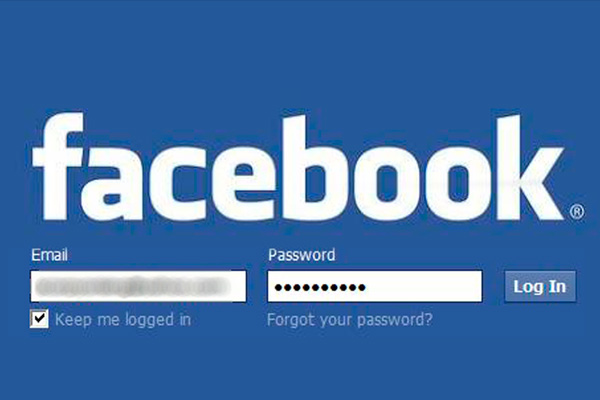
The stupidest thing you can possibly do on the Internet is to use the same user names and passwords for the different online platforms and services. Then how come we keep repeating it all over again, with the self-destructive stubbornness? We are either too lazy or unforgivingly ignorant about the cyber security.

Finally, someone has decided to do something about it. What exactly and how efficiently? Well, the Facebook has decided to turn the first page. If it turns out that you are using your Facebook account user name and password for some other web service, you will get a fair warning to change them accordingly.

How the Facebook knows all of that? You should relax. If Facebook knows it, then you can rest assured more than one hacker knows it, as well. It is always better to change them all before any real damage is being done. On the other side, do not worry about your privacy. Facebook works for you, in this case.

Do we have to repeat it all? User name and password twins on the Internet are not a smart choice. Do not be lazy and at least create different passwords, if you do not have enough patience to play with the different user name combinations. Our hats off to the Facebook for this thoughtful move.

Internet Trolls And Prison Walls

image

Is there such a thing as the Internet Troll? Apparently there is. If you are an Internet troll and you are happen to be somewhere in the UK, you can easily spend some time in prison. To be a little bit more precise, instead of six months, now you are facing two years of jail time. Why? What for? Confused?

Cyber trolls are all about the virtual violence, which produces suffering and pain in the real life. We guess you do not need additional explanation, do you? The Internet trolls are all around us. We just do not call them these names or we are not fully aware it is a punishable crime. Is this a good idea?

On the one side, the new technologies ask for the new appropriate laws. On the other side, we sure hope that this new regulation will not take the wrong turn and pay an unpleasant visit to our privacy. That would be the worst case scenario in this situation. What can we do to avoid it in the first place?

That is the tricky part. Honestly, not much. What if your government thinks you are the Internet troll from its point of view, because of your political activism? This is a nice initiative, which has to be kept under a strict control. Or, otherwise we can all become trolls and orcs. They do not allow Warcraft in prison, do they?

Thank You JPM, It’s Time For Our Next Snack

image

Once you try the flesh of the major financial institutions, there is no coming back to where you used to hack before. This is exactly what happened with the group, which paid an unexpected visit to the JPMorgan. And, they are after for some more VIP financial blood. This does not have to be necessarily all bad.

Why? How can we say such a thing? Well, there is some poetic justice in this one. No matter what kind of cyber tools they use, our good old friendly hackers are still the human beings. And, they get infected with the greedy virus too, sooner or later, this way or another. What more can we expect?

For what is worth, the hackers have started to mess up with the wrong guys. These institutions can afford themselves a luxury of hiring the very best cyber security experts. They make the money. They can make some extra to fight back with the vengeance. Now, let us see what happens in the aftermath.

This is how it works. You do not do something for real, unless the trouble knocks at your door. In the clash between the financial wizards and cyber crime master minds, you know who is going to prevail eventually, don’t you? We sure hope it is not going to include some collaterals. In both finances and among us.

The Shadow IT

image

The big bad and ugly wolf is coming. It is called the EU General Data Protection Regulation. Actually, it is supposed to protect us and save us from the three little pigs, who have mastered some hacking in the meantime. Then, how come the worrying majority of the employees in the EU is not willing to cooperate? Fully.

Nowadays, the IT guys in your company can forget the good old days when they were the Alphas and Omegas in your office. The cloud technology and the absolute abundance of available mobile devices were the fruitful ground for the new phenomena called the “shadow IT”. What in the world is that?

Well, this is a nice way for you to avoid the situation with the EU General Data Protection Regulation way, or the highway. You can still do your thing without worrying about those boring new regulations, including your paranoid IT colleagues. What is so difficult and problematic about the new IT security measures?

It is the similar, if not absolutely the same, situation with the traffic safety regulations. They are supposed to protect you. You can ignore them or even work against them, but at your own risk. The same goes for the IT security measures, rules and policies. Instead of keep asking why, just comply.

Public Interest – Private Security

image

This year’s NATO summit passed under the blinding spotlights of the recent events in Ukraine. No wonder so many things associated with this organization went below the radars of our attention almost unnoticed. Yes, cyber boys and girls the NATO had enough time to discuss cyber security, as well.

Are you surprised or intrigued? Or both? The NATO Industry Cyber Partnership (NICP) has obviously decided to thoroughly change some things about its cyber security measures and structure itself. Well, when it comes to this one, we have two important questions to ask. Can you dare to make a wild guess?

The first one is naturally to examine the motivation for this “sudden” and surprising acknowledgment of cyber security’s importance. What went wrong? Or, maybe the NATO prepares itself for something huge. Russia or China, for example? The second question is definitely more important.

Why it has to be a private sector to handle these sensitive things on behalf of the NATO? What is happening with the top government agencies in this field? Should we be worried or flattered? Is this some kind of a recognition for a quality work or an indication of some new waves in the restless cyber sea?

New Law Blade For A Fair Trade

image

The US House of Representatives has finally acknowledged something that should have been done years and years earlier. As you probably know the US law has been extremely protective when it comes to the IP (Intellectual Property) field. On the other side, the trade secrets were left on their own.

Now, with this new law the US companies have a unique opportunity to address federal courts in cases associated with the trade secret thefts. So far, only the IP theft cases had the granted access to the US federal courts. What is the motivation for this law? Well, this one just could not be more obvious.

The US companies have approximately 5 trillion reasons for it. Let us not forget to mention the cases of cyber espionage, which are also covered by this law. This is definitely a good news from the business point of view. Yet, there is more than one practical question to be answered in this matter.

The Chinese government will obviously get an additional chapter to discuss. On the other side, if the US government is so thoughtful about the business related interests, what about our privacy related concerns? There is no such a law on the horizon. What do we have to do to change that?

Spamistics

image

Can a spam email eventually prevail? Well, that is entirely up to us. Let us see what our fellow users in the USA, UK, France and Germany are doing about it. First, let us deal with numbers, shall we? On the other hand, be prepared to accept an additional trouble in this story – the malicious URLs.

Yes, busy little IT bees the spam trouble strongly appreciates the company of the malware related URLs. If you are living in the UK and you get spammed, the chances are five to one against you that your spam will get you infected with malicious URLs compared with your friends in France or Germany.

The funny thing about this story, though, is that bad URLs do not go necessarily with bad emails. Therefore, in the UK the chances are bigger that you will get both spams and malware URLs. Nevertheless, in France and Germany you will get less spam in the first place compared to the UK situation.

What is happening with the USA in this spam story? Well, they are somewhere in between the UK and Germany/France statistical situation. While using your email in the USA you will get a little bit of both. So, where is the country where you can be spam and malicious URLs free? Any ideas?

Malvertising, What Is That?

image

Yeah, what is that? It sounds so familiar, but we are not quite sure what is it exactly. Is malvertising a bad online advertising? For what is worth, any kind of online advertising is annoying and malicious from the users’ personal point of view. Yet, this is something completely different. What exactly?

Well, malvertising is something you get when malware and advertising fall in love. As a result, you got yourself a malware, which spreads almost like an advertisement. The most dangerous thing about this new method is the use of the legitimate software and ways to spread the malware content.

And unfortunately, this is only the beginning of bad news. Some of the most important major IT league players are involved unwillingly. Yes, the things are that much serious. Let us mention Amazon, YouTube and Yahoo. Is this enough to give you the unforgettable headache and sleepless nights?

So, what can we do about it? As always, to know is almost a half way to cure something. Now, we know where our enemy moves and how. This is supposed to be more than enough to do something about it. We only need to find someone skillful enough to do a proper and quick job. Right?

Collateral Nude Damage

image

Oh boy, just when you thought the trouble with the celebrity nude photos could not get any worse we heard about the new bad news. It seems that New Zealand had some serious issues with the Internet this weekend. The poor curious Kiwi guys just could not help themselves. They had to see them.

The nude photos of some of the most beautiful actresses in the world. The hackers were waiting for the thing like this one. What a nice opportunity to infiltrate malware and all kinds of trojans. And now you have it. The celebs are in tears, and the users covered with fears. This is a lose – lose situation.

You do not have to be a rocket scientist to figure out yourself. So, what can we do about it? Both parties, celebs and we the plebs? Well, we should hold our horses and do our best to avoid the nude photos temptation. On the other hand, do not make movies and nude photos at the same time.

For what is worth, the hackers themselves have nothing to lose with this one. For them it is a clear win – win situation. As you can see some of the most powerful malware and trojan solutions feed on our vanity and voyeurism. Our human code is the strongest programming code. Unfortunately.